

Home » Phone Booth Soundproof XL


| Model | SRP-XL |
| Environmental Grade | E0 Environmental Protection |
| Package Size | W2910*D1000*H1120mm & W2260*D1110*H1250mm |
| External Size | W3000*D4286*H2346mm |
| Internal Size | W2840*D4250*H2140mm |
| Wooden Frame: | W4300*D520*H335mm |
| Weight | GW:286kg NW:242kg |
| Annual Supply Volume | Daily production capacity of 60 units, annual supply of about 20,000 units |
| Representing Clients | Tesla, Amazon, Apple, United Airlines, BYD, Huawei, Alibaba, Tencent, |
| Note | The movable kits and frosted films are sold separately as needed. The weight does not include matching furniture, electrical appliances, and equipment. |
Soundbox is a technology company focusing on acoustic technology research and product manufacturing The Silent Pod is one of Soundbox’s original products, constructed with professional acoustic technology and technological materials. From the cabin structure to the acoustic characteristics, it is strictly designed by acoustic simulation and mechanical modeling
Each soundproof phone box solution combines functionality with modern aesthetics, featuring durable construction, ventilation systems, and plug-and-play installation. Global corporations, co-working spaces, and educational institutions trust our products for their durability, ease of use, and exceptional noise reduction capabilities.
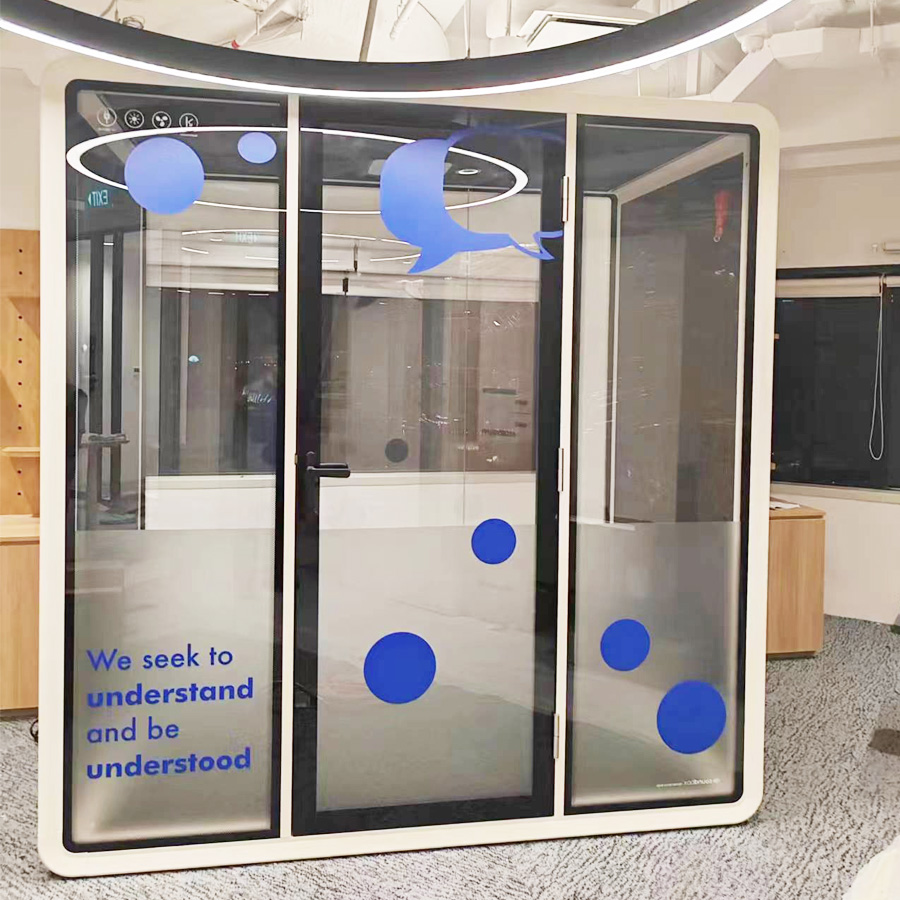
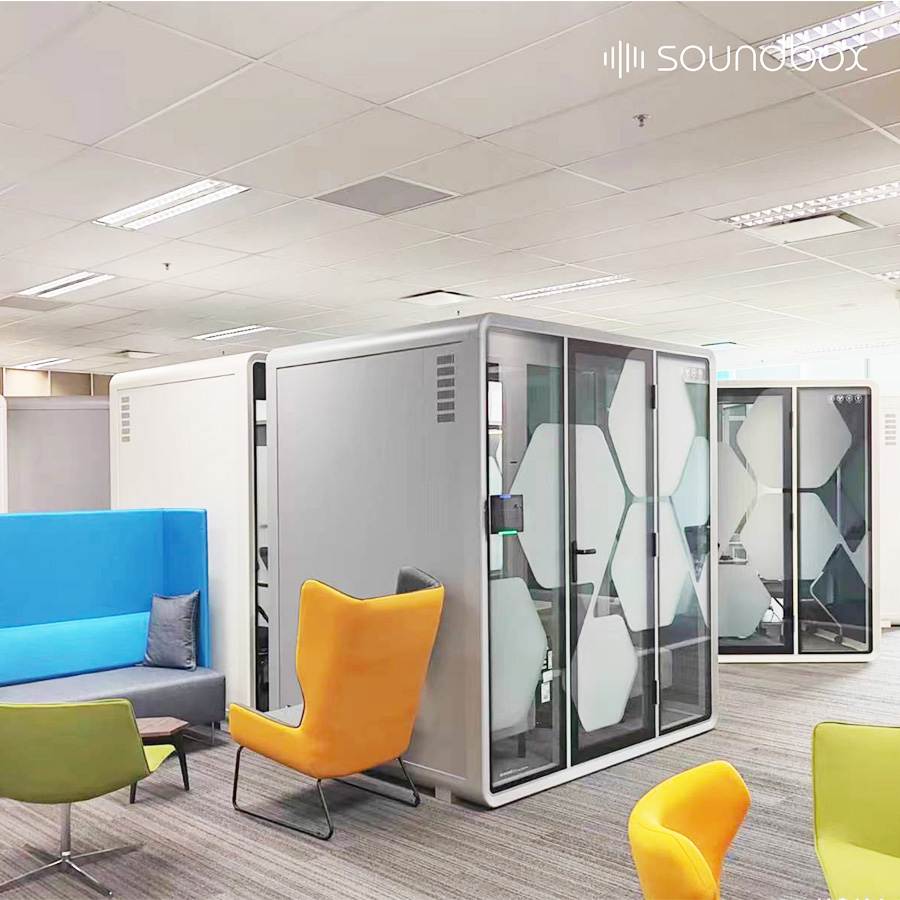
Boost Productivity Instantly! Soundproof Office Booths With Military-Grade Acoustic Design. Free Office Layout Consultation!
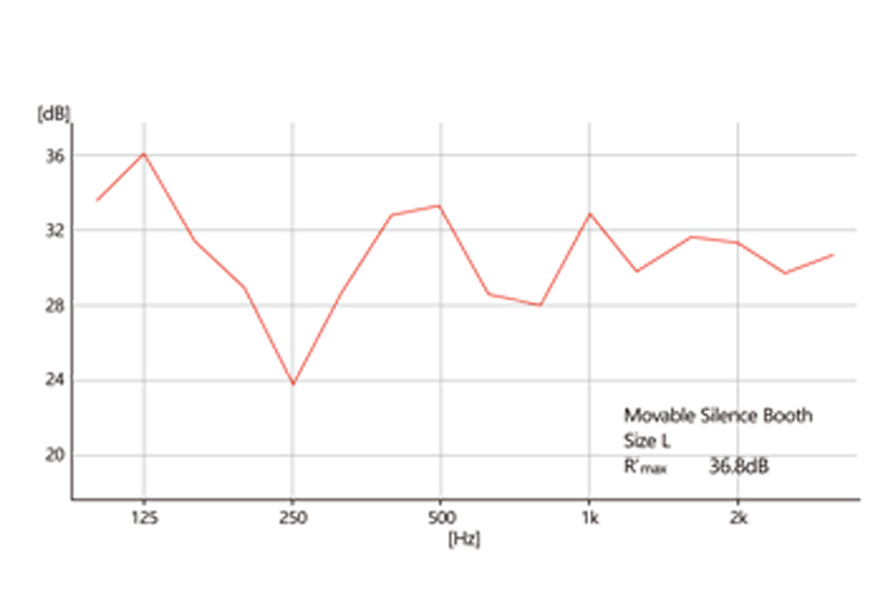
ISO 23351-1:2020 is a newly introduced standard that evaluates the ability of telephone booths, work pods, and other furniture assemblies to reduce speech levels. Through specified testing methods, it calculates a metric called “Speech Level Reduction”, expressed as D (decibels/dB). This standard is the first of its kind specifically designed for cabins and similar partially enclosed furniture units. Office pods are classified A+, A, B, C, or D based on the level of speech reduction they provide. Office pods in Classes A+, A, and B ensure the highest levels of speech privacy.
Use high-density soundproofing materials (e.g., metal, concrete, glass) on primary surfaces to effectively reduce sound wave transmission.
Optimize gap sealing using waterproof adhesives, sealing strips, or appropriate sealing materials to ensure minimal noise leakage.
In areas where complete soundproofing is unachievable (e.g., ventilation ducts), increase the distance of sound travel and apply sound-absorbing materials (e.g., PET acoustic felt) along the path to dissipate sound energy.
STC (Sound Transmission Class): A method for measuring a material’s ability to block sound, commonly used to test partition materials like walls and screens. A higher STC value indicates better sound-blocking performance. STC is critical for evaluating walls that isolate conversation areas.
NRC (Noise Reduction Coefficient) measures the sound isolation effectiveness between two rooms post-construction. A higher NRC value signifies better sound isolation.
While STC and NRC are similar, they differ in application:
NRC is a field measurement conducted in real-world spaces, whereas STC is a laboratory measurement.
STC does not account for factors like sound absorption in the receiving room, making NIC a more comprehensive metric for evaluating sound isolation between rooms, beyond just the partition itself.
Speech intelligibility refers to the ability of listeners to understand and comprehend spoken words or messages. It measures the clarity and ease of understanding verbal communication across contexts such as public address systems, telecommunications, broadcast media, or live performances. Factors influencing speech intelligibility include pronunciation, articulation, volume, background noise, and the quality of the audio transmission system. High speech intelligibility is the desired outcome to ensure effective communication and minimize misinterpretations.
Unlike common axial fans, a centrifugal fan typically consists of a fixed drum-shaped housing and one or more impellers. It moves air radially, directing the airflow through ducts or channels to generate high-pressure airflow, making it ideal for applications such as air suction, cooling, ventilation, and air conveyance.
PET acoustic felt is a material made from polyethylene terephthalate (PET) fibers, commonly used in textile and fiber production. It is a widely used sound-absorbing material applied in various acoustic applications, such as the construction of soundproof booths, recording studios, and other spaces where noise control is critical.
PET acoustic felt is typically manufactured by compressing and heating PET fibers to create a dense, porous structure. The pores within the material help absorb and scatter sound waves, reducing noise transmission. Its felt-like texture further enhances sound absorption by dispersing and diffusing sound energy, improving its overall acoustic performance.
Laminated glass (also known as safety glass) is widely used for sound insulation purposes due to its unique structure. Composed of multiple glass layers bonded with a polyvinyl butyral (PVB) interlayer, laminated glass effectively reduces noise transmission by absorbing and scattering sound waves. This design minimizes the transfer of external noise into indoor environments, creating a quieter and more tranquil atmosphere. Additionally, laminated glass offers enhanced safety, UV protection, and is commonly used in windows, doors, and partitions to achieve superior sound insulation in high-noise exposure areas.

Empowering future workspaces
Enabling 90% of users to achieve 30%+ productivity gains through Soundbox soundproof office booths.
If you want to know more about our company or information about the product, please complete this short form. We will reply to you as soon as possible.


